

Daily habits such as diet, exercise, sleep, and social connections significantly influence longevity.
Lifestyle choices like a Mediterranean diet, regular physical activity, and stress management are key.
Supplements and drugs are supporting tools; focus on sustainable, evidence-based compounds
Most people chasing a longer life reach for a supplement bottle or the latest biohacking gadget first. But the research tells a different story. The real drivers of longevity are woven into the fabric of your daily choices: what you eat, how you move, how well you sleep, and who you share your life with. This guide cuts through the noise and delivers evidence-backed, practical steps tailored for health-conscious individuals across the European Union. From diet and exercise to stress management, disease prevention, and social connection, you’ll find a clear, actionable roadmap to a longer and healthier life.
Table of Contents
- Essential prerequisites for longevity improvement
- Build a longevity-friendly lifestyle: Diet, physical activity, and sleep
- Stress management and disease prevention: Tools for living longer
- Maximize longevity: Social ties, environmental factors, and verifying progress
- What most longevity guides miss: Lessons from science and real-world experience
- Resources and solutions to supercharge your longevity journey
- Frequently asked questions
Key Takeaways
| Point | Details |
|---|---|
| Lifestyle trumps genetics | Your daily habits and social connections have a far greater effect on longevity than inherited genes. |
| Diet, activity, sleep matter most | A Mediterranean or plant-based diet, regular exercise, and quality sleep form the foundation for a longer, healthier life. |
| Prevention is powerful | Routine screenings and stress management are essential for reducing chronic disease risk and boosting well-being. |
| Social ties add years | Purpose, community, and social connection can extend your life expectancy by decades according to the best evidence. |
Essential prerequisites for longevity improvement
Before you restructure your diet or sign up for a new fitness program, it’s worth pausing to understand what actually moves the needle on lifespan. Most people overestimate the role of genetics and underestimate the power of daily habits. The science is clear: genetics account for only ~25% of how long you live, meaning lifestyle and social ties drive the remaining 75%. That’s an enormous amount of control sitting in your hands right now.
The right mindset for longevity is your first prerequisite. Without it, even the best strategies fall apart within weeks. Think of mindset not as motivation, but as the operating system that keeps every other habit running. Pair that with a few non-negotiables and you’re ready to build.
Core prerequisites checklist:
- A growth mindset: view health as a lifelong practice, not a destination
- Basic dietary awareness: understanding macronutrients and food quality
- At least one strong social connection to anchor your habits
- Willingness to track progress, even loosely
- Access to preventive healthcare within EU systems
A common misconception is that longevity requires radical change. It doesn’t. Small, compounding improvements are what longevity experts consistently point to as the most sustainable path forward.
| Factor | Modifiable? | Impact level |
|---|---|---|
| Genetics | No | ~25% of longevity |
| Diet and nutrition | Yes | High |
| Physical activity | Yes | High |
| Sleep quality | Yes | High |
| Social ties | Yes | High |
| Stress management | Yes | Moderate to high |
| Environmental factors | Partially | Moderate |
Pro Tip: Start with one habit change per week. Stacking too many changes at once is the fastest route to burnout and backsliding.
With the foundations set, let’s move to the central lifestyle pillars.
Build a longevity-friendly lifestyle: Diet, physical activity, and sleep
These three pillars are the engine of healthy aging. Get them right and everything else becomes easier. Get them wrong and no supplement will compensate.
Diet: Build your plate around evidence
The Mediterranean diet reduces all-cause mortality by 23%, making it the most studied and validated dietary pattern for longevity. It’s built around vegetables, legumes, whole grains, olive oil, fish, and moderate amounts of dairy and red wine. For EU residents, this pattern aligns naturally with seasonal, local produce.
Here’s how to shift your diet step by step:
- Replace refined oils with extra-virgin olive oil as your primary cooking fat
- Add one additional serving of vegetables or legumes to lunch and dinner
- Swap processed snacks for nuts, seeds, or fresh fruit
- Eat fish at least twice per week, prioritizing oily varieties like sardines or mackerel
- Reduce red and processed meat to fewer than two servings per week
- Explore anti-aging nutrition strategies to go deeper on micronutrients
Exercise: Move with purpose
Regular physical activity improves healthspan, cognitive function, and metabolic health across all age groups. Aim for a weekly mix of aerobic, strength, and mobility work.

| Exercise type | Frequency | Example |
|---|---|---|
| Aerobic (cardio) | 150 min/week | Brisk walking, cycling, swimming |
| Strength training | 2 to 3x/week | Bodyweight, resistance bands, weights |
| Mobility and flexibility | Daily | Yoga, stretching, tai chi |
Sleep: Your body’s repair cycle
Quality sleep is a cornerstone habit of living longer and healthier. Adults need 7 to 9 hours per night. Keep a consistent sleep and wake time, reduce screen exposure 60 minutes before bed, and keep your bedroom cool and dark. Sleep is a master regulator of hormones, immune function, and cellular repair.
Pro Tip: Track your sleep, steps, and meals for just two weeks using a free app. Awareness alone tends to improve adherence by making patterns visible.
Diet, exercise, and sleep are key, but stress and prevention matter too.
Stress management and disease prevention: Tools for living longer
Chronic stress is a silent accelerator of aging. It floods your body with cortisol (a stress hormone), disrupts sleep, inflames tissues, and shortens telomeres (the protective caps on your DNA). Managing it isn’t optional. It’s foundational.
Mindfulness and the parasympathetic system
Activating the parasympathetic nervous system through mindfulness is directly linked to longevity outcomes. The parasympathetic system is your body’s rest-and-repair mode. Practices that activate it include:
- Mindfulness meditation: even 10 minutes daily reduces cortisol measurably
- Diaphragmatic breathing: slow, deep breaths signal safety to your nervous system
- Yoga: combines movement, breath, and focus for triple-layered stress relief
- Nature exposure: spending time outdoors lowers stress markers within minutes
- Journaling: externalizing worry reduces its physiological grip
For a broader view of how these tools fit into a whole-life approach, explore active longevity solutions that integrate movement, mindset, and recovery.
Preventive screenings: Don’t wait for symptoms
“Chronic disease prevention is always more effective than treatment after the fact. The best time to act is before you feel anything at all.”
Preventive screenings per EU guidelines are one of the most underused tools in longevity. Catching cardiovascular risk, blood sugar imbalances, or early-stage conditions early changes outcomes dramatically. Follow this basic schedule:
- Blood pressure check: at least annually after age 40
- Fasting glucose and HbA1c: every 1 to 3 years depending on risk
- Lipid panel: every 5 years, more often with family history
- Colorectal cancer screening: from age 50 per EU recommendations
- Bone density scan: women over 65, earlier if risk factors are present
Pro Tip: Add your next screening to your calendar today. Treating prevention like an appointment rather than a vague intention makes it happen.
Having mastered prevention and stress, maximize longevity with social and environmental actions.
Maximize longevity: Social ties, environmental factors, and verifying progress
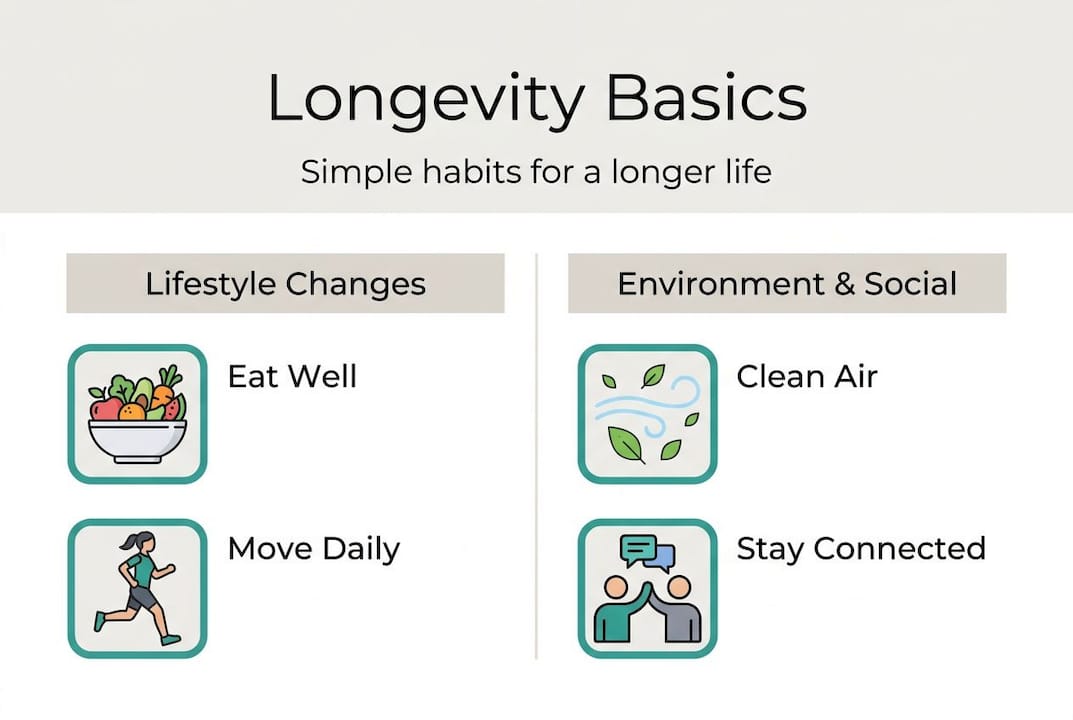
Here’s a fact that surprises most people: strong social ties and a sense of purpose can add up to twenty years to life expectancy. Not exercise. Not diet. Social connection. It affects immune function, inflammation, hormonal balance, and even how quickly cognitive decline sets in.
Building social connection and purpose
- Schedule regular in-person time with friends or family, at least once per week
- Join a community group tied to a shared interest, sport, or cause
- Volunteer: purpose-driven activity is one of the strongest predictors of longevity
- Eat meals with others when possible. Blue Zones research confirms that plant-heavy diets combined with communal eating are consistent features of the world’s longest-lived populations
- Limit passive screen time and replace it with interactive social activities
The link between education and lifespan is also worth understanding. Continuous learning and mental engagement protect brain health and correlate strongly with longer, healthier lives.
Environmental adjustments
Your physical environment shapes your habits more than willpower does. Reduce exposure to air pollution where possible, prioritize green spaces, and minimize noise stress at home. Small changes like keeping a fruit bowl visible, storing unhealthy snacks out of sight, or placing your running shoes by the door make healthy choices the default.
Tracking and verifying your progress
| Area | What to track | How often |
|---|---|---|
| Diet | Food journal or app logging | Daily for 2 weeks, then weekly |
| Exercise | Steps, workout sessions, heart rate | Weekly |
| Sleep | Duration and quality score | Daily |
| Biomarkers | Blood glucose, lipids, blood pressure | Annually or per doctor advice |
| Mental well-being | Mood, stress levels | Weekly self-check |
If you’re ready to go deeper, the 7 areas to start your longevity journey resource maps out a structured, whole-life approach to lasting change.
Now, let’s look at fresh perspectives on what really works for lasting change.
What most longevity guides miss: Lessons from science and real-world experience
Here’s the uncomfortable truth most longevity content won’t tell you: the supplement industry is built on hope, not evidence. As of 2026, no supplements or drugs have proven longevity benefits in humans. Not resveratrol. Not NMN. Not metformin used off-label. The science simply isn’t there yet.
What the science does confirm, repeatedly and across populations, is that the basics work. Sleep. Movement. Real food. Community. Purpose. These aren’t exciting. They don’t make for viral content. But they are what the longest-lived people on earth actually do.
We’ve seen this pattern play out in our work: people who obsess over the anti-aging obsession rabbit hole often neglect the fundamentals. Meanwhile, those who quietly build consistent habits and strong social networks tend to thrive. The aging gracefully framework we advocate isn’t about fighting aging. It’s about optimizing the life you’re living right now.
Simplicity, done consistently, is the most radical longevity strategy available to you.
Resources and solutions to supercharge your longevity journey
You now have the roadmap. The next step is personalizing it to your biology.

At LifeUnlocked, we’ve built tools designed to make that personalization real and measurable. Our longevity kits give you at-home blood and DNA testing so you can see exactly where your body stands, not guess. The Omega-3 DNA test reveals how your genetics affect fatty acid metabolism, a key longevity lever. And our BOOST 2.0 supplement supports muscle, collagen, and cellular energy for those who want targeted nutritional support alongside their lifestyle changes. Your longevity journey deserves more than guesswork.
Frequently asked questions
What is the single most important factor in improving longevity?
Lifestyle choices account for roughly 75% of longevity impact, making diet, activity, sleep, and social ties collectively more influential than genetics.
Does intermittent fasting or calorie restriction work better for longevity?
Both approaches offer similar benefits; intermittent fasting and calorie restriction provide comparable longevity advantages, though adherence and individual response vary widely.
How often should I get screenings for chronic diseases?
Annual preventive screenings are recommended for most adults, with frequency increasing with age; follow EU NCD prevention guidelines for condition-specific schedules.
Are there any proven supplements or drugs to enhance longevity?
No. As of 2026, no supplements extend lifespan with strong human evidence; your best investment remains consistent lifestyle habits.
How can I track if my changes are truly improving longevity?
Combine annual biomarker testing with weekly self-assessments of sleep, mood, and energy; regular self-testing and tracking are proven tools for measuring real progress.
Recommended
- Active longevity: holistic solutions for thriving well-being – LifeUnlocked
- What is healthy aging? A complete guide to holistic longevity – LifeUnlocked
- Top Anti-Aging Nutrition Tips Backed by Science for 2026 – LifeUnlocked
- Step-by-step supplement guide: longevity in 5 moves – LifeUnlocked
- Longevity Supplements Science: Effective Evidence-Based Insights – NeuroStack
Podíl:
Optimize vitamin levels for longevity: 40% are deficient